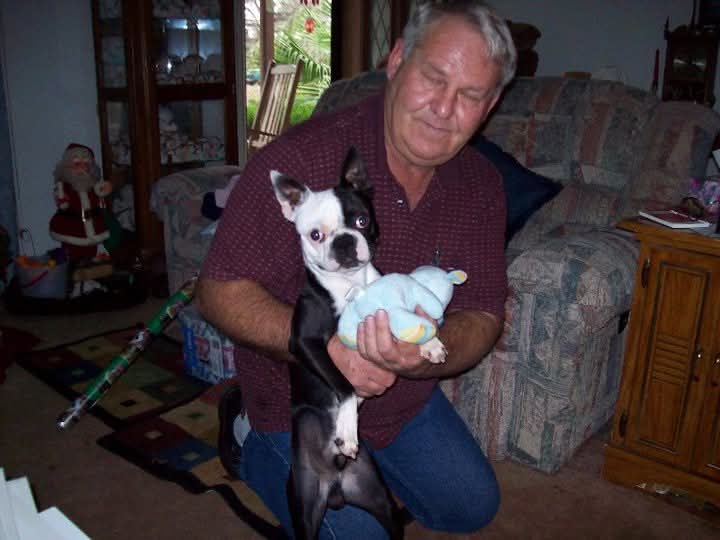
I have countless memories of family gatherings at my Granny Essie’s house. The smell of warm buttermilk biscuits baking in the oven and a pot of butter beans simmering on the stove seemed to greet us before we even stepped through the door. Those visits were more than shared meals—they were precious opportunities for my mom to spend time with her two younger brothers. It was in that little house, filled with laughter, stories, and the comfort of family, that some of my earliest memories of my Uncle Milton were made.
As a small child, Uncle Milton was a little intimidating to me. He had a deep, gruff voice and loved to pick and tease, which could make a shy little girl nervous. But beneath that rough exterior was one of the gentlest souls you could ever meet. He was as soft-hearted as a teddy bear. Though he never had children of his own, he poured his love into his nephews and nieces, spoiling us every chance he got. Looking back, I realize that every tease, every joke, and every smile was simply his way of showing how much he cared.
Uncle Milton always looked sharp. His clothes were neatly pressed, his hair was combed perfectly in place, and he carried himself with quiet pride. I can still remember his scent—a mixture of clean aftershave and a faint trace of cigarettes. It’s funny how certain smells stay with you long after a person is gone. Even now, catching a similar scent can instantly take me back to those days, seeing him smile, hearing his deep voice, and feeling the comfort of having him nearby.
As I grew older, Uncle Milton and I became much closer. He encouraged my love of history, a passion we both shared. He would often tell me stories about my grandfather’s service during World War II, helping me feel connected to a man I never had the chance to know. My grandfather passed away the year before I was born, so those stories became precious gifts, allowing me to know him through the memories of those who loved him.
As the years passed, I often drove my mom to visit Uncle Milton and his wife. Those visits were simple but meaningful. We would share a meal, sit around the table, and he would tell stories from his childhood that brought our family’s history to life. He always asked about my mother’s health, checking on her with genuine concern and love. Even as they grew older, he never stopped looking out for his sister. He worried about her the way a good brother should, and the bond they shared was evident in every conversation.
When Mom was fighting her battle with cancer, Uncle Milton made sure to check on her often. He would call regularly to see how she was feeling and to offer words of encouragement. Whenever she was strong enough, I would drive her over to visit him. Those visits became more difficult as chemotherapy took its toll on her body, leaving her exhausted and weakened. Still, they cherished every moment they could spend together. Their conversations were filled with love, concern, and the unspoken understanding that comes from a lifetime of shared memories. Even in the midst of her illness, the bond between brother and sister remained as strong as ever.
On June 24, 2018, I received one of the most devastating phone calls of my life. My aunt called to tell me that Uncle Milton had passed away in his sleep.
The news hit me like a punch to the chest. My heart broke instantly, not only for myself but for my mother. She had already endured so much with her battle against cancer, and now she was facing the loss of her beloved brother. The man who had spent a lifetime looking after her, worrying about her, and loving her unconditionally was suddenly gone.
It didn’t seem possible. Just days before, he had been telling stories, asking about Mom’s health, and doing what he always did—being a caring brother and uncle. Now there would be no more phone calls, no more family visits, and no more stories shared around the table.
The loss left an empty space in our family, one that could never truly be filled.
The grief strangled me. I was overwhelmed by worry over my mother’s battle with cancer, the collapse of my marriage, and now the death of my Uncle Milt. It felt as though death and grief had become my constant companions, following me everywhere I went. I wondered if I would be strong enough to support my mother through yet another heartbreak. Could I carry both of us through this? Could I make it?
My aunt called, asking Mom and me to meet her at the funeral home to help make arrangements. That same morning, Mom had an appointment for what would be her final chemotherapy treatment. Despite the exhaustion, nausea, and weakness that consumed her body, she was determined to be there for her brother one last time.
When we arrived at the funeral home, we immediately went to work. Together, we sorted through photographs, selected music, and shared memories. My dad would help officiate the service. He had conducted countless funerals throughout his years in ministry, but this one was different. This was his brother-in-law, a man he had loved and known for decades. His participation made the service both easier and more meaningful for our family.
Later, I stopped at a local florist to choose flowers on behalf of our family. I selected a beautiful autumn nature tapestry depicting a group of deer standing in a grassy glen. The florist added a small silk arrangement to accompany it for the visitation. It felt fitting for a man who loved the outdoors and found peace in nature.
That afternoon, family and friends gathered for the visitation. The sanctuary was quiet except for the gentle sound of hymns drifting through the room. At the front rested a silver casket adorned with a spray of red roses. On either side were two symbols that perfectly represented Uncle Milt: a bald eagle draped with an American flag honoring his military service, and a buck representing his lifelong love of hunting.
The scent of roses and carnations filled the air while whispered conversations carried stories and memories from one group to another. People approached my aunt and mother with soft hugs, gentle pats on the shoulder, and heartfelt condolences.
My mother sat among them, weakened by chemotherapy. Her skin was pale, and a head wrap concealed the loss of her beautiful hair. Yet her determination never wavered. One of the funeral directors gently suggested that she go home and rest before the funeral service the following day. She refused.
So I stayed beside her, holding tightly to her frail hand as silent tears streamed down her face.
As the evening wore on, the funeral home slowly emptied until only the two of us remained. Together we watched the photo slideshow play across the screen, image after image telling the story of a life well lived.
Finally, Mom looked at me and whispered, “I just can’t leave him.”
Those words shattered me.
I can still see the tears glistening on her cheeks. I can still feel the weight of that moment pressing against my chest. Because we both knew that once we walked out those doors, everything would change. It would become real.
There would be no more visits. No more phone calls. No more stories.
Her brother was gone.
And as I sat there holding her hand, I realized she wasn’t just saying goodbye to Uncle Milt. She was saying goodbye to one of the last living connections to the family and childhood she had known and loved for nearly eighty years.
Watching her heartbreak that night remains one of the most painful moments of my life.
The morning of the service, we shared a quiet breakfast. The house felt different, weighed down by grief and exhaustion. I think each of us was silently praying for comfort, strength, and the courage to face the day ahead.
My dad sat at the table with his Bible open before him, making a few final notes for the service. Though he had officiated countless funerals throughout his ministry, this one was personal. This time, he wasn’t simply comforting another family—he was saying goodbye to someone he loved.
My mother sat quietly beside us, subdued and withdrawn. The chemotherapy had left her nauseated and weak, and she could barely manage a few bites of food. Yet despite everything her body was enduring, she was determined to be there.
The drive to the funeral home was nearly silent. There seemed to be no words left to say. We each sat alone with our thoughts, preparing ourselves for the final farewell.
When we arrived, our vehicles were placed in the family procession for the interment. As we lined up behind the hearse, the reality of what was about to happen settled heavily over us. This would be our last journey with Uncle Milton.
The service was a beautiful blend of sorrow and remembrance. Family and friends gathered to celebrate Uncle Milton’s life while mourning the loss of the man we loved so dearly.
My dad stood before the congregation and spoke words of comfort, hope, and peace to all who had come to honor my uncle. Though he had delivered countless funeral messages over the years, I could hear the emotion in his voice. This was not just another service. This was family.
I could no longer hold back my tears as the familiar strains of “In the Garden” and “The Old Rugged Cross” filled the sanctuary. The hymns seemed to wrap around us, carrying both our grief and our faith. One by one, people rose from their seats and made their way forward to pay their final respects.
When it was our turn, I reached for my mother’s trembling hand and held it tightly. Together, we walked slowly toward the casket.
For a moment, everything around us seemed to disappear. The voices faded. The music softened. There was only the overwhelming reality that this was our final goodbye.
My mother stood silently beside her brother, her frail body weakened from months of chemotherapy, her heart broken by loss. I watched tears slip down her cheeks as she looked upon him one last time.
I squeezed her hand, wishing I could somehow ease her pain, knowing there was nothing I could do except stand beside her and share it.
Neither of us was ready to let him go.
But the time had come.
With heavy hearts and tear-filled eyes, we whispered our final goodbye to Uncle Milton and stepped away, carrying with us a lifetime of memories that death could never take away.
The ride to the cemetery was slow and steady as our family followed behind the hearse carrying Uncle Milton to his final resting place. No one spoke much. We simply watched the winding procession ahead of us, each lost in our own thoughts and memories.
At the graveside, his casket rested beneath a freshly draped American flag. Family and friends gathered close together as the service came to its final moments. The closing prayer was beautiful, offering comfort to those left behind and gratitude for a life well lived.
Then came the military honors.
The sharp crack of rifles shattered the stillness of the cemetery as the honor guard fired a twenty-one-gun salute. The sound echoed across the grounds, each volley a solemn tribute to Uncle Milton’s service and sacrifice. When the final shot faded, a lone bugler began to play “Taps.”
The haunting melody drifted through the air, bringing tears to many eyes, including my own. It was a sound both beautiful and heartbreaking—a farewell unlike any other.
As the final notes lingered, the soldiers carefully folded the American flag that had draped his casket. With precision and reverence, they presented it to the family, a symbol of a grateful nation’s respect for one of its veterans.
In that moment, I felt an overwhelming sense of pride amid my grief.
Uncle Milton had been many things—a beloved brother, uncle, husband, storyteller, and friend. He had mattered deeply to our family. But standing there beneath the summer sky, watching those soldiers honor him, I was reminded that his life had mattered beyond our circle as well.
He mattered not only to us.
He mattered to his country.
And for a brief moment, as the final notes of “Taps” faded into silence, it felt as though an entire nation was saying thank you.