This part of my grief journey is fresh and deep and extremely hard to get out.
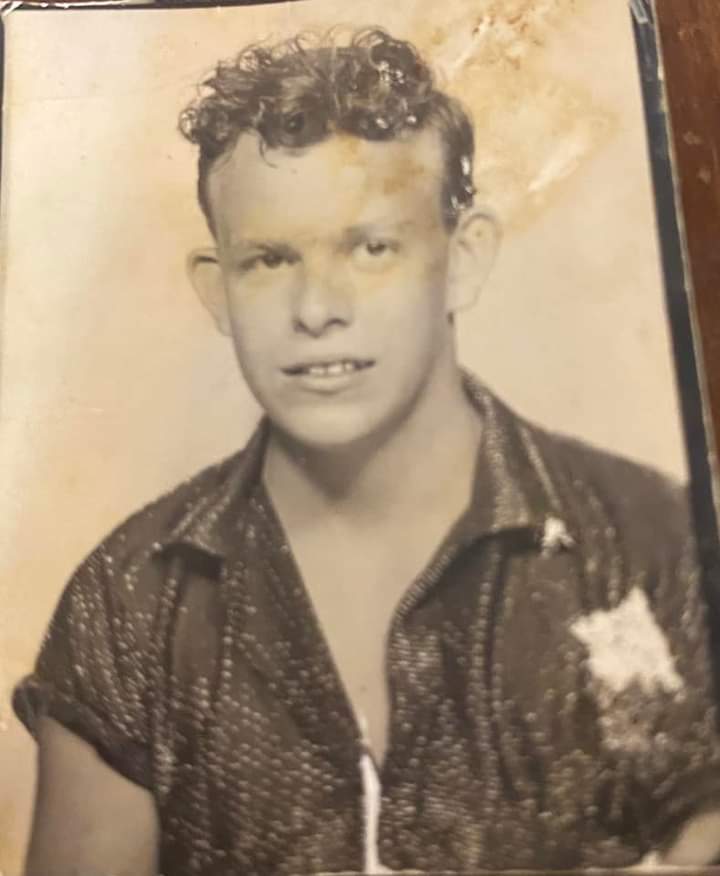
This is my Daddy’s story.
Walter Dale to some. Brother Walter to many. But Pops to his kids and grandkids.
He wasn’t born into an easy story.
He was born on December 12, 1943, in the middle of World War II, to Edwin and Josie Knighton.
My Granny Jo had wanted another daughter, and when Walter was born a boy, she was upset. Daddy always told the story that the doctor who came to deliver him offered to take him. She couldn’t do it, of course. She kept her baby.
Daddy would joke about it later, saying that if she had given him away, he could have been rich.
I can still imagine him telling that story with that little bit of humor that made it easier to talk about something that probably wasn’t funny at all.
His father, Edwin, was a merchant marine and a Baptist preacher. The Bible wasn’t just something they read on Sundays. It was simply part of the air in that house from the time Walter could talk.
Walter was the youngest boy in a family of six children. Because of his father’s work, the family moved often, living in port cities such as Long Beach, California, and Port Arthur, Texas.
By all accounts, he had a happy childhood.
He would visit the neighbors, watch their television, and probably hope they would offer him something sweet while he was there.
Just a little boy being a little boy.
And then, when he was fifteen, everything changed.
His father was killed in a boiler explosion off the coast of Oregon.
Fifteen.
I’ve thought about that number so many times.
Fifteen is still a child in so many ways. Old enough to understand that someone is gone, but nowhere near old enough to understand how you’re supposed to live with that kind of loss.
Daddy didn’t talk much about how he carried the death of his father. Maybe some things were simply too heavy to put into words.
His mother, my Granny Jo, struggled in the years that followed. She married four or five more times, trying to find her footing again, trying to rebuild a life after losing her husband.
And the family scattered in the way grieving families sometimes do.
Two of Daddy’s older brothers joined the military. His brother James was deaf and had lost part of his right arm. His oldest sister had gotten married and was expecting her first child.
I’m sure they helped as much as they could. Everyone was trying to find their way through their own lives, their own losses, their own responsibilities.
And somewhere in the middle of all of that was a fifteen-year-old boy who had suddenly lost his father.
A boy who would one day become my Daddy.
I’ve always thought it says something about who he became.
That boy could have grown up believing the world was a lonely place.
Instead, he spent his life telling other people they weren’t alone.
He became the man people called Brother Walter.
The man people went to when they needed prayer.
The man who would eventually become Pops.
And the man I called Daddy.
Maybe that’s one of the hardest parts of grief for me now.
I’m not just grieving the man I lost.
I’m grieving the boy I never got to know.
The fifteen-year-old who lost his daddy.
The little boy who watched his family change.
The young man who had to figure out how to keep going.
And I wish I could go back and find him somehow.
Just for a minute.
Just long enough to tell him:
You are going to be okay.
You are going to become somebody’s safe place.
You are going to spend your life telling people about a God who never leaves them.
And one day, you are going to be my Daddy.
 Ebbs & Flows